Large-format processing
Plan sheet handling, usable work area, exhaust zones, and the sequence of long cutting paths before selecting an SP-format system.
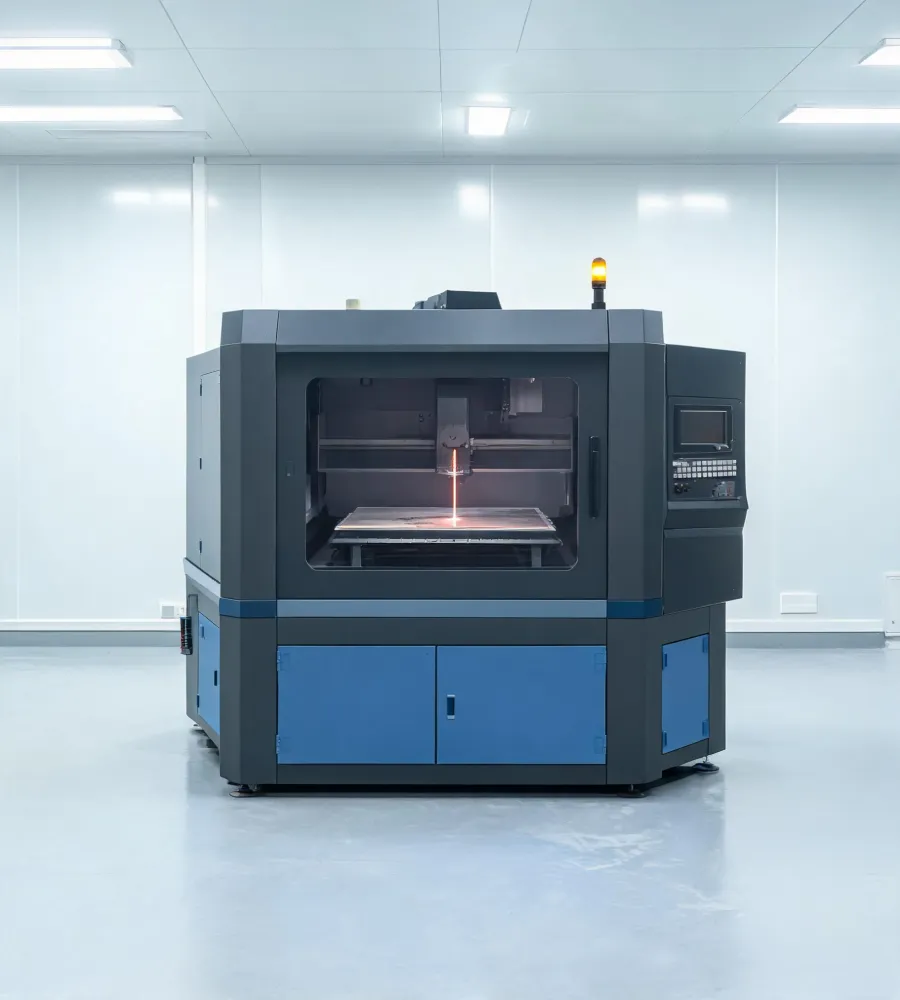
Match the laser source, motion platform, extraction strategy, and software path to the material and finish your operators must reproduce.
The equipment category is the starting point. Material response, bed size, exhaust demand, focal setup, and production mix determine the practical configuration.

For mixed-material job queues, compare CO2 processing behavior on acrylic, wood, paper, laminates, and approved polymer stock. A sample matrix reveals whether throughput, edge quality, or fine-detail resolution is the binding requirement.
Review laser systems →Plan sheet handling, usable work area, exhaust zones, and the sequence of long cutting paths before selecting an SP-format system.
Evaluate metal grade, coating, contrast target, line width, and cycle requirement with a controlled mark matrix.
Where the material mix crosses organic substrates and metals, compare source suitability rather than forcing one setting philosophy across both.
Each brief records the decision criterion, parameter window, observation method, and operator handoff. The numbers below describe the checks—not unsupported promises.
Measure fit, edge appearance, and residue across a small speed-and-power matrix before releasing a nested sheet.
Inspect mark darkness, line definition, and heat effect under fixed lighting, then retain the accepted sample with the recipe.
Time a representative batch, including loading, focusing, extraction wait, unloading, and inspection—not laser-on time alone.
Record material trade name, thickness, coating, maximum part envelope, expected batch pattern, and acceptable visual finish. Exclude materials with unknown chemistry until documentation is available.
Hold focus, optics condition, extraction, and artwork constant while changing one energy-related variable at a time. Label every coupon so an attractive result can be traced to its settings.
Repeat the candidate recipe on a second area or part and inspect the result after cleaning. Variation matters more than a single best-looking coupon.
Document software layer rules, job origin, focus method, airflow, inspection cue, and stop conditions. Train operators to recognize when a material lot or optical condition requires a new test.
Share the substrate, thickness, artwork type, finish target, and production pattern. The application brief helps frame a relevant trial and exposes limits early.